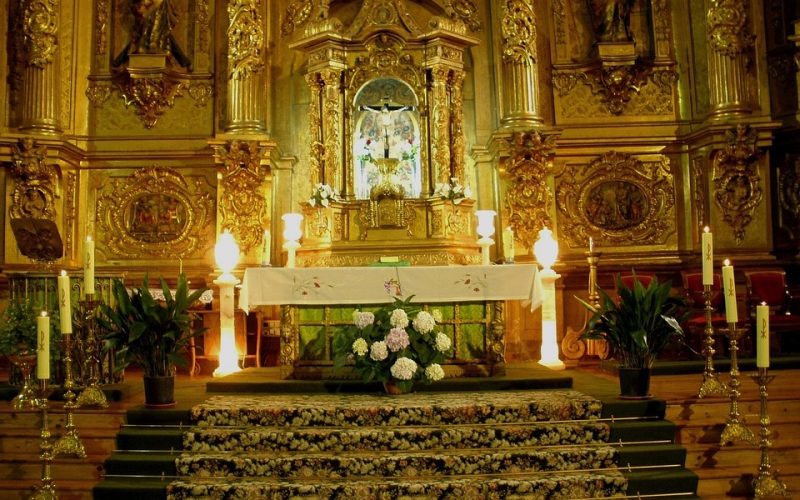
Confirming the Baptism
Confirmation is one of the seven sacraments of the Catholic Church and one of the three sacraments of initiation, alongside baptism and the Eucharist. It is the sacrament through which a baptised person is strengthened by the gifts of the Holy Spirit and formally deepens their commitment to the Catholic faith. The word "confirmation" reflects this idea — it confirms and strengthens the grace first received at baptism.
During the confirmation ceremony, the bishop (or an authorised priest) anoints the candidate on the forehead with sacred chrism oil and says, "Be sealed with the gift of the Holy Spirit." This act of anointing marks the individual as a full member of the Church and equips them to live and defend their faith. Candidates also choose a confirmation name, typically the name of a saint who will serve as their patron and spiritual guide.
What is baptism in the Catholic faith?
Baptism is the first and most fundamental sacrament in Catholicism. It marks a person's entry into the Church and is considered necessary for salvation according to Catholic teaching. Through baptism, original sin is washed away, the soul is reborn in grace, and the individual becomes a member of the Body of Christ.
The rite involves the pouring of water over the person's head (or full immersion) while the minister says, "I baptise you in the name of the Father, and of the Son, and of the Holy Spirit." Baptism can be administered to infants — which is the most common practice in Catholicism — or to adults who are converting to the faith through the Rite of Christian Initiation of Adults (RCIA).
How do confirmation and baptism differ?
Whilst both sacraments are closely connected, they serve distinct purposes in a Catholic's spiritual journey. Baptism is the beginning — it initiates a person into the faith, removes original sin, and imparts sanctifying grace for the first time. Confirmation, on the other hand, builds upon that foundation. It is often described as the moment when a person consciously and maturely embraces the faith they received at baptism.
Another key difference lies in readiness and intention. Infant baptism is performed on behalf of the child, with parents and godparents making promises on their behalf. Confirmation, however, is typically received later in life — often in the teenage years — when the individual is old enough to make a personal commitment to their faith.
The gifts of the Holy Spirit
Central to the sacrament of confirmation are the seven gifts of the Holy Spirit: wisdom, understanding, counsel, fortitude, knowledge, piety, and fear of the Lord. These gifts, rooted in scripture (Isaiah 11:2–3), are believed to be infused into the soul at confirmation, helping the individual live a life consistent with their faith. They are not passive gifts — they call the confirmed Catholic to actively grow in virtue and service to others.
Why both sacraments matter
Together, baptism and confirmation form a spiritual arc that shapes a Catholic's identity and calling. Baptism plants the seed of faith; confirmation nurtures and strengthens it. Both are considered permanent sacraments — meaning they can only be received once — and both leave what the Church calls a "spiritual seal" or character on the soul.
For many Catholics, confirmation is a deeply meaningful milestone. It is the moment when faith shifts from something received passively to something owned personally. Whether celebrated in a cathedral with a bishop or in a local parish, the sacrament carries the same weight: a renewed commitment to God and a deeper connection to the universal Church.